 Smart
SmartThe 50/30/20 Budget Rule: The Simplest Way to Manage Your Money
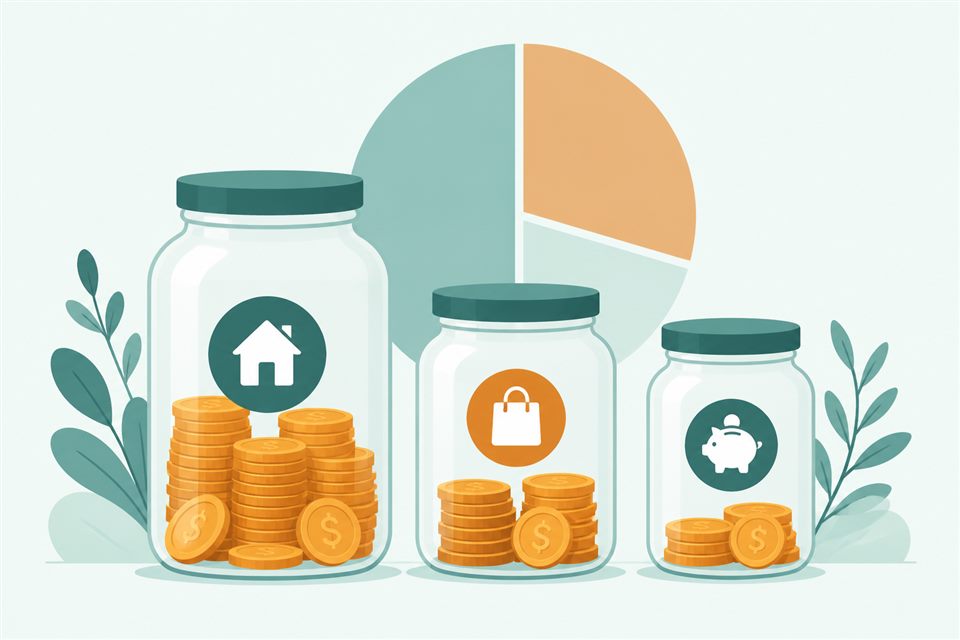
If every budgeting method you've tried has failed within a month, you're not alone — and the problem probably isn't you. Most budgets fail because they're too complicated. The 50/30/20 rule survives where spreadsheets with forty categories die, because it asks you to track just three numbers.
What is the 50/30/20 rule?
The 50/30/20 rule divides your after-tax income into three buckets:
- 50% for needs — rent or mortgage, groceries, utilities, transportation, insurance, minimum debt payments.
- 30% for wants — restaurants, streaming services, hobbies, travel, that coffee you don't technically need.
- 20% for savings and debt payoff — emergency fund, retirement contributions, and any debt payments above the minimum.
The rule was popularized by Senator Elizabeth Warren in her book All Your Worth, and it has stuck around for a simple reason: it's forgiving. It doesn't ask you to give up lattes. It just asks you to keep the big proportions healthy.
A real example
Say you take home $3,600 a month after taxes. Your targets would be:
| Bucket | Percentage | Monthly amount |
|---|---|---|
| Needs | 50% | $1,800 |
| Wants | 30% | $1,080 |
| Savings & extra debt payoff | 20% | $720 |
Notice what this does psychologically: it gives you explicit permission to spend $1,080 on fun. Budgets that treat every non-essential dollar as a failure make you feel guilty, and guilt is why people quit. Here, enjoying your money is part of the plan.
How to set it up in 4 steps
Step 1: Find your real after-tax income
Look at what actually lands in your bank account each month. If you're self-employed or your income varies, average the last six months and use a slightly conservative number.
Step 2: Sort last month's spending into the three buckets
Pull up your bank and card statements and label each transaction as a need, a want, or savings. Be honest: groceries are a need, DoorDash is a want. The first time you do this is usually eye-opening — most people discover their "wants" are closer to 45% than 30%.
Step 3: Compare and adjust one bucket at a time
Don't try to fix everything at once. If your wants are at 42%, aim for 36% next month, then 30% the month after. Gradual cuts stick; drastic ones snap back.
Step 4: Automate the 20%
Set up an automatic transfer to savings for the day after payday. If the money moves before you see it, willpower never enters the equation. This single automation is worth more than any budgeting app.
What if my needs are more than 50%?
In expensive cities, housing alone can eat 40% of take-home pay, and that's a reality no percentage rule can wish away. If your needs run 60–65%, you have three levers, in order of impact:
- Reduce the big fixed costs. A cheaper apartment, a roommate, or moving one neighborhood over does more than a hundred small sacrifices.
- Increase income. A raise, a job change, or a side income shifts every percentage at once. (See our guide to realistic side hustles.)
- Run a temporary 70/20/10. Use a modified split while you work on the first two levers. A budget you can actually follow beats an ideal one you can't.
Common mistakes to avoid
- Counting minimum debt payments as "savings". Minimums are a need. Only payments above the minimum count toward your 20%.
- Classifying wants as needs. A car is a need; a new car with a $650 payment usually isn't. Internet is a need; the 1 Gbps gaming tier is a want.
- Ignoring irregular expenses. Car repairs, gifts, and annual subscriptions wreck budgets that only think month-to-month. Divide yearly irregulars by 12 and treat that as a monthly need.
- Giving up after a bad month. One blown month is data, not failure. Look at what broke the budget and adjust the plan, not your self-esteem.
The bottom line
The 50/30/20 rule won't optimize every dollar, and hardcore budgeters will find it blunt. That's exactly why it works. It keeps the three numbers that matter — how much you need, how much you enjoy, and how much you keep — in a healthy balance, with almost zero maintenance. Start with last month's statement, sort your spending into three buckets, and automate the savings. That's the whole system.
Next up: put that 20% to work by building an emergency fund from zero.