 Smart
SmartHigh-Yield Savings Accounts Explained: Where Your Emergency Fund Should Live
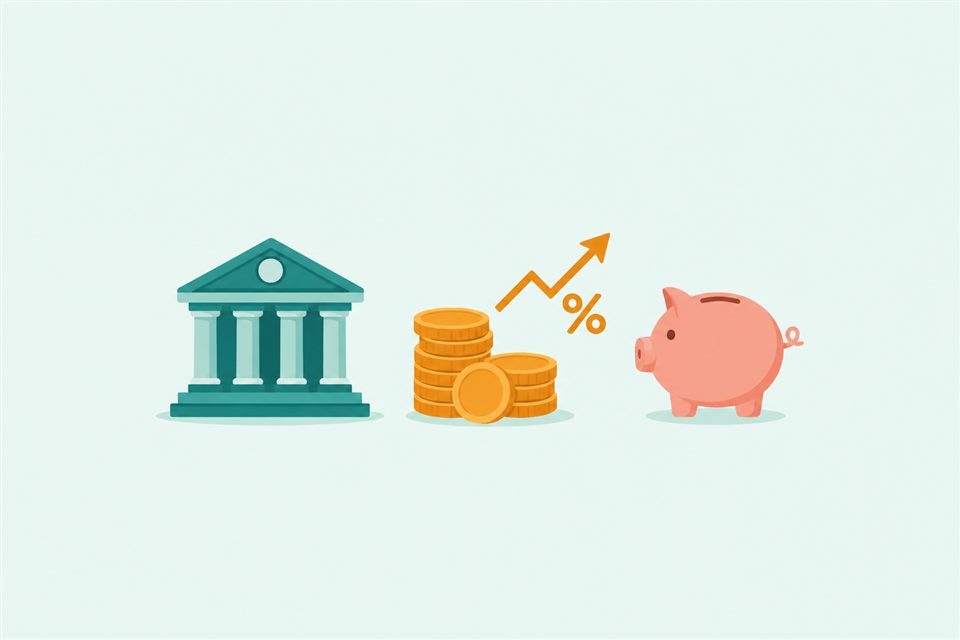
If your emergency fund is sitting in a traditional bank savings account earning 0.01% interest, it's quietly losing value to inflation every year. A high-yield savings account (HYSA) is the boring, safe upgrade almost everyone should make — same protection, often 10–20× the interest, and usually no fees.
What is a high-yield savings account?
It's a savings account that pays a meaningfully higher interest rate than the big brick-and-mortar banks. Most HYSAs are offered by online banks that don't pay for expensive branch networks — and they pass some of that savings to you as a better Annual Percentage Yield (APY).
Your money is still cash. It's still federally insured (FDIC in the U.S., or the equivalent deposit insurance in your country, up to the covered limit). It is not invested in the stock market, so the balance doesn't jump around with headlines.
How much difference does the rate actually make?
On $5,000 sitting for a year:
| Account type | Typical APY | Interest earned |
|---|---|---|
| Traditional big-bank savings | ~0.01% | about $0.50 |
| High-yield savings | ~4.00%* | about $200 |
*Rates change. The point isn't a specific number — it's that online HYSAs routinely pay many times what legacy banks pay on the same safe cash.
Over five years of building an emergency fund, that gap compounds into real money you earn for doing nothing except choosing a better account.
What to look for when you open one
- Deposit insurance. Confirm FDIC (or your country's equivalent) coverage.
- No monthly fees and no minimum balance for the rate you're being shown.
- Easy transfers to and from your checking account (usually 1–2 business days).
- A competitive APY — compare a few reputable online banks; the top rates cluster together.
- No gimmicks. Skip accounts that require a huge opening deposit or bury the rate behind 12 conditions.
How to move your money over (about 30–60 minutes)
- Open the HYSA online with ID and your Social Security / tax ID (or local equivalent).
- Link your current checking account (routing + account number, or a secure bank login).
- Transfer your emergency fund in. Start with whatever you have — even $100.
- Set an automatic transfer for the day after payday so the fund grows without willpower.
What a HYSA is not for
- Long-term investing. Over decades, broad index funds have historically outpaced savings rates. Use a HYSA for cash you may need within a few years.
- Paying off high-interest debt first. A 20%+ credit card costs more than any HYSA pays. Follow a debt payoff plan before maximizing cash beyond a starter emergency fund.
- Chasing the absolute highest rate every month. Hopping banks for an extra 0.1% is rarely worth the hassle. “Good and simple” beats “perfect and exhausting.”
The bottom line
Open a fee-free, insured high-yield savings account, park your emergency fund there, and automate deposits. You'll earn more interest, keep the money safer from impulse spending, and finally give your cash a job that isn't “sit and lose to inflation.”
Next: if you don't have the fund yet, start with building an emergency fund from zero.